
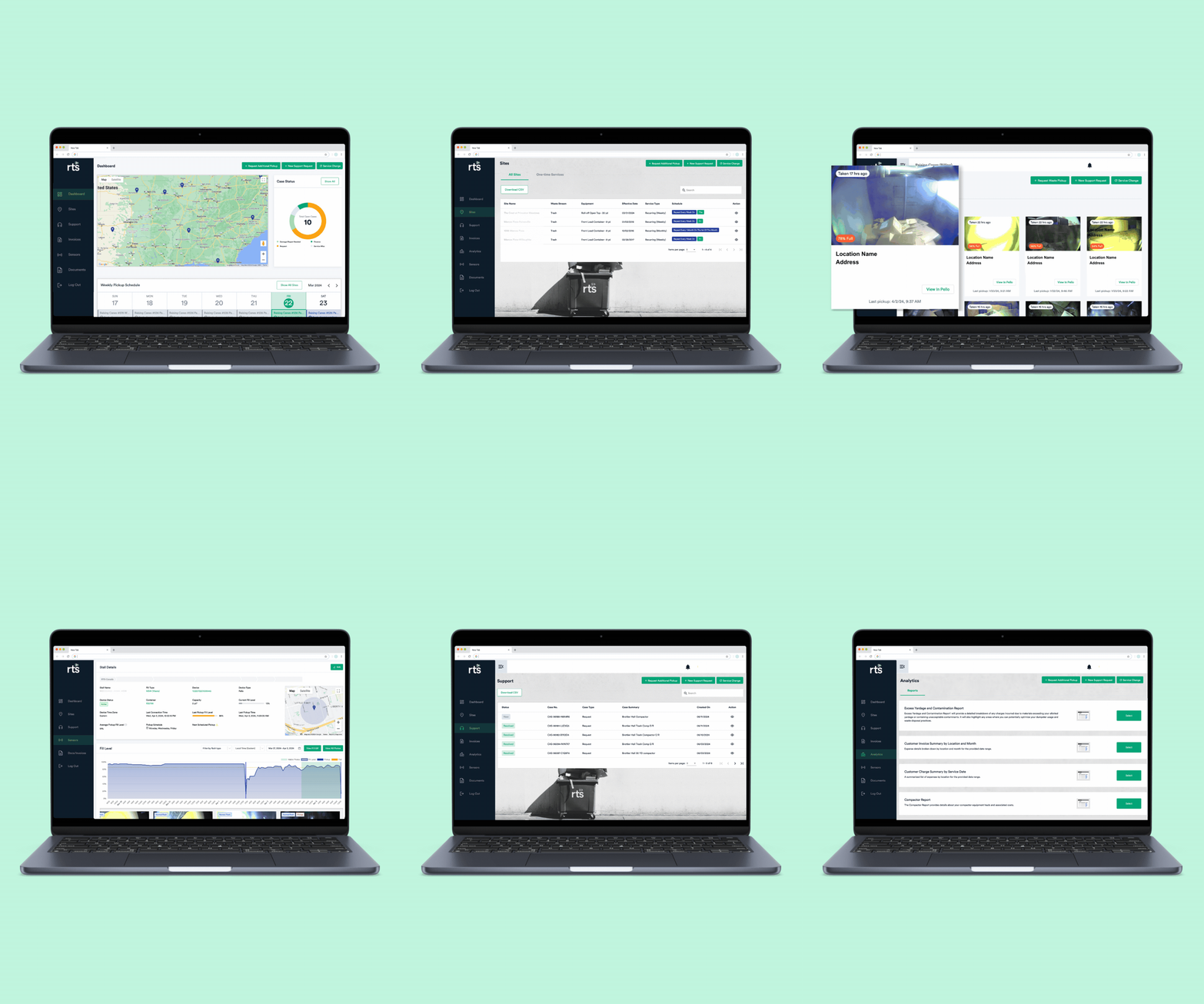
Some of the most important technology we’re building at RTS is technology our customers may never see directly. My work this year has focused on the operating layer behind the company: how information connects, how teams make decisions and how AI can eventually help an organization like RTS operate with greater speed and consistency.
That is an important challenge because modern waste operations involve enormous coordination. A national customer may have locations across multiple markets, different service requirements, multiple providers and constantly changing operational needs. Our job at RTS is to make that complexity feel manageable.
Technology is how we scale that ability.
Connect the Work, Not Just the Data
A common approach to modernization is to put information into one system. Our team is aiming for something more important: Connecting the work itself.
When the relevant information around a customer can move coherently through an organization, teams no longer have to reconstruct the full picture before they can solve a problem. They can spend more time acting on information and less time searching for it. That creates the foundation for something even more powerful.
AI Has to Earn Trust
One of the biggest questions our team has been thinking through is not simply what AI can automate. It is what AI should automate. At RTS, we believe trust has to be designed into the system. When technology recommends an important action, people should understand what it is proposing. When judgment matters, people should remain in control.
And as systems prove that they can perform certain work reliably, we can progressively expand what technology is able to assist with. I think of that as earned autonomy. It is very different from turning AI loose inside a business and hoping it makes good decisions.
The System Should Show Its Work
The principle we’re designing around is transparency. People trust technology more when they can understand what it is doing. That matters for employees. It matters for customers. And it is especially important in industries like waste, where software ultimately drives actions in the physical world.
If teams do not trust the system, they create workarounds. If they do trust it, technology can begin removing enormous amounts of repetitive coordination and administrative effort. That allows talented people to focus on the parts of the work where humans are most valuable: judgment, relationships, problem-solving and exceptions.
An AI-Native Operating Model
This is what excites me about the work our team at RTS is doing. We’re not simply asking where we can add an AI feature. We’re thinking about what the operating model of an AI-enabled waste company should look like from the ground up.
- How should information connect?
- Where should automation help?
- Where should humans remain in control?
- How do you make intelligence useful without making the system opaque?
Those are difficult questions.
They’re also the questions I believe more companies will have to answer as AI moves from isolated tools into the core of business operations. At RTS, we’re getting the opportunity to answer them in an industry that is ready for modernization. The future isn’t software that replaces the people running waste operations. It’s an intelligent operating system that makes those people dramatically more capable.
That’s what our team is building toward.