
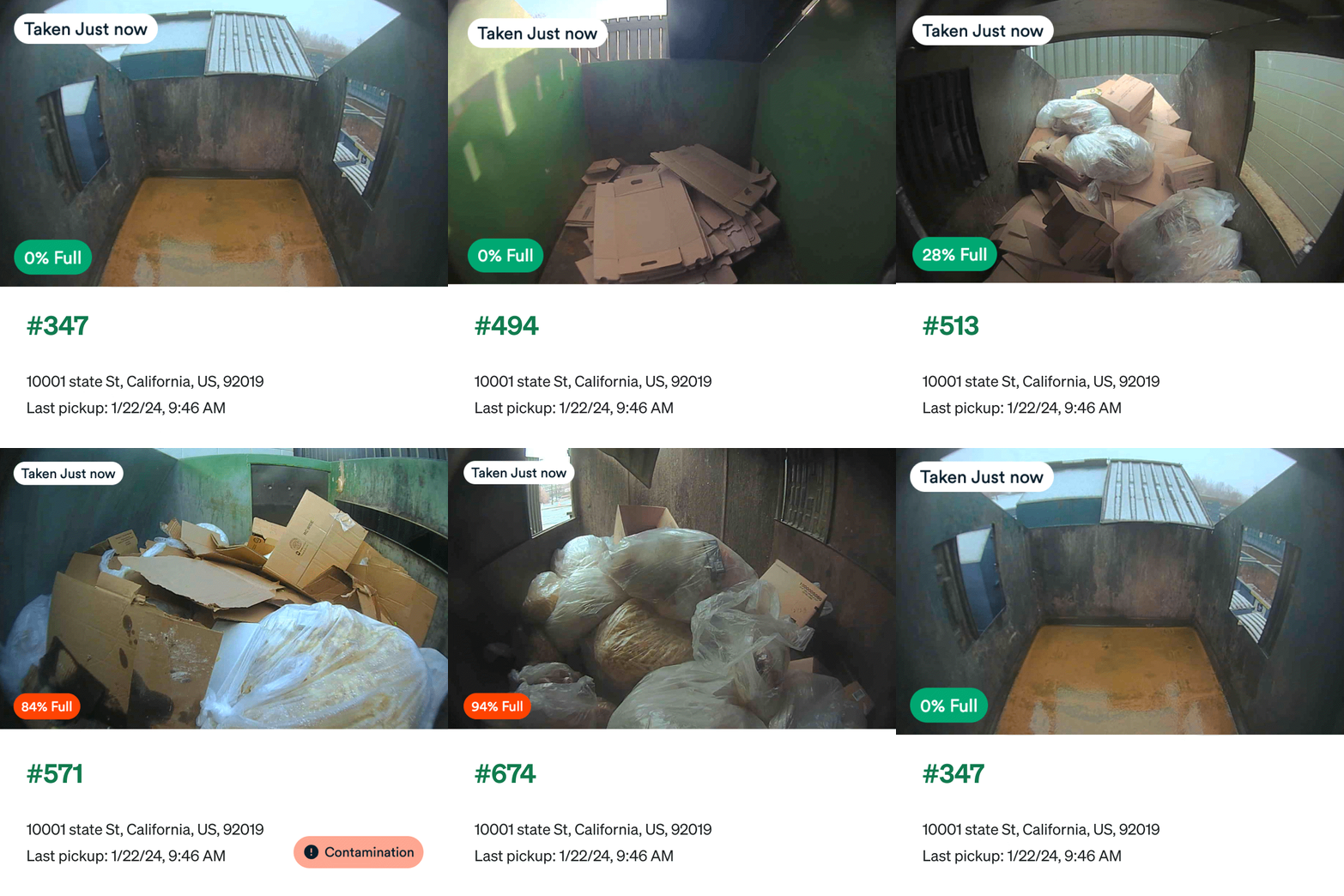
Behind every Pello device is physical work. Someone has to install it correctly. The technology has to be connected to the right container and location. Field information has to make its way accurately into the digital systems that RTS teams and customers rely on. That field layer is easy to overlook when people talk about AI and smart infrastructure.
Our Pello team at RTS spends a lot of time thinking about it. Because a smart sensor can only create useful intelligence if the physical and digital worlds stay accurately connected.
One of the projects I’ve been most excited about is rethinking how software can support that connection.
The Field Is Not a Lab
Building technology for technicians creates a very different set of constraints than building software for someone sitting at a desk. Our teams are working around actual waste infrastructure. Labels may be weathered. Lighting conditions change. Devices live outdoors. Technicians need to complete work efficiently and move on to the next location. Good field technology has to accommodate reality. That has pushed our RTS team toward a simple design principle:
Make the software do more of the administrative work so the technician can focus on the physical work.
One example is using images more intelligently. Rather than forcing a field technician to manually reproduce information that already exists on a device or container, software can use a photo to help capture and verify that information. It’s a relatively simple idea. But small moments like that become important when you’re operating technology across a large physical network.
Automate What You Can Verify
The more interesting part of the project, for me, has been deciding when software should be allowed to act automatically. The easy answer is: automate everything. Our team believes the better answer is:
Automate what you can confidently verify. If the information lines up and the system has the context it needs, software can remove unnecessary manual work. If something doesn’t make sense, it should go to a person. That is a pattern I think will become increasingly important as AI enters more physical operations. The real world is full of exceptions. Technology needs to know when it has enough confidence to proceed—and when it doesn’t.
Building a Repeatable Model
What excites me most is that we’re not thinking about this as a single workflow. We’re thinking about the larger pattern.
- Structured field information
- Photo-assisted capture
- Automated validation
- Human review for exceptions
That combination can help RTS connect field activity to digital systems more accurately and efficiently as our technology footprint grows. For customers, most of that should be invisible. They should simply experience faster deployment, accurate information and technology that works the way it is supposed to from day one. For technicians, it means spending less time interacting with administrative processes and more time doing the work they are there to perform.
And for RTS, it creates a stronger bridge between our software and the physical infrastructure our software is designed to understand.
Modernizing the Connective Tissue
Waste has historically required enormous amounts of manual coordination. AI and automation create an opportunity to rethink that connective tissue. Not every innovation has to be a futuristic robot. Sometimes innovation is taking a process that has depended heavily on people moving information around and designing a system that can capture, verify and connect that information more intelligently.
That’s what our team at RTS is working on. And to me, it’s one of the most important parts of bringing AI into the physical world: The intelligence only matters if you can reliably connect it to what is actually happening on the ground.