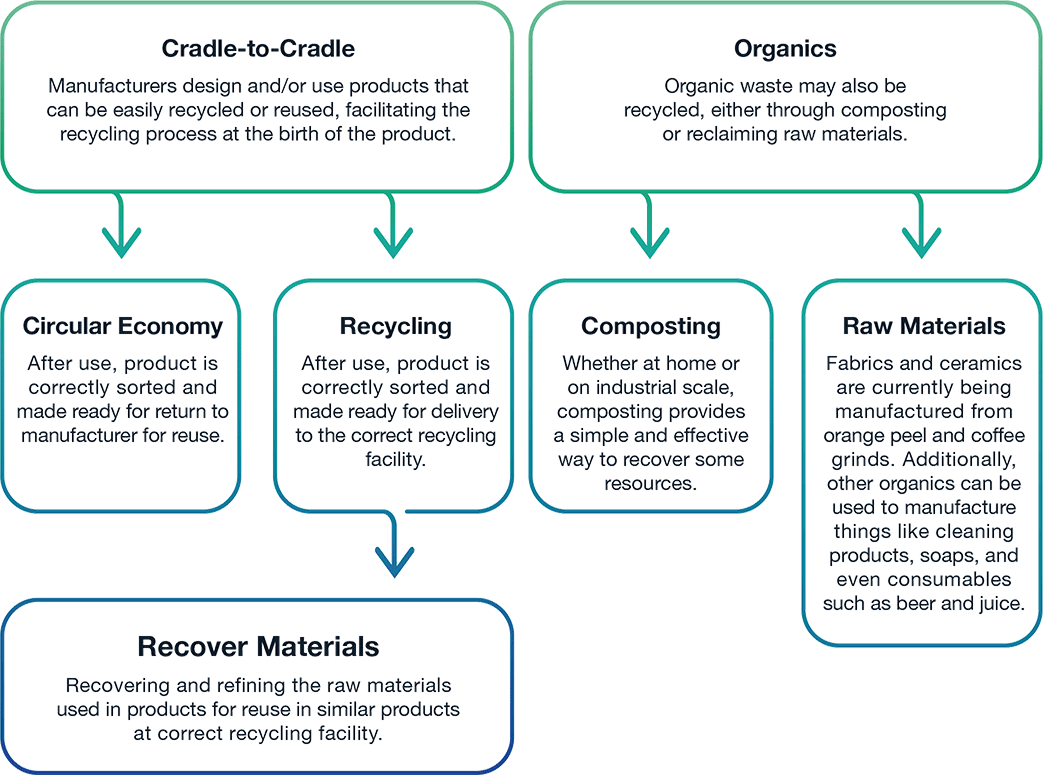

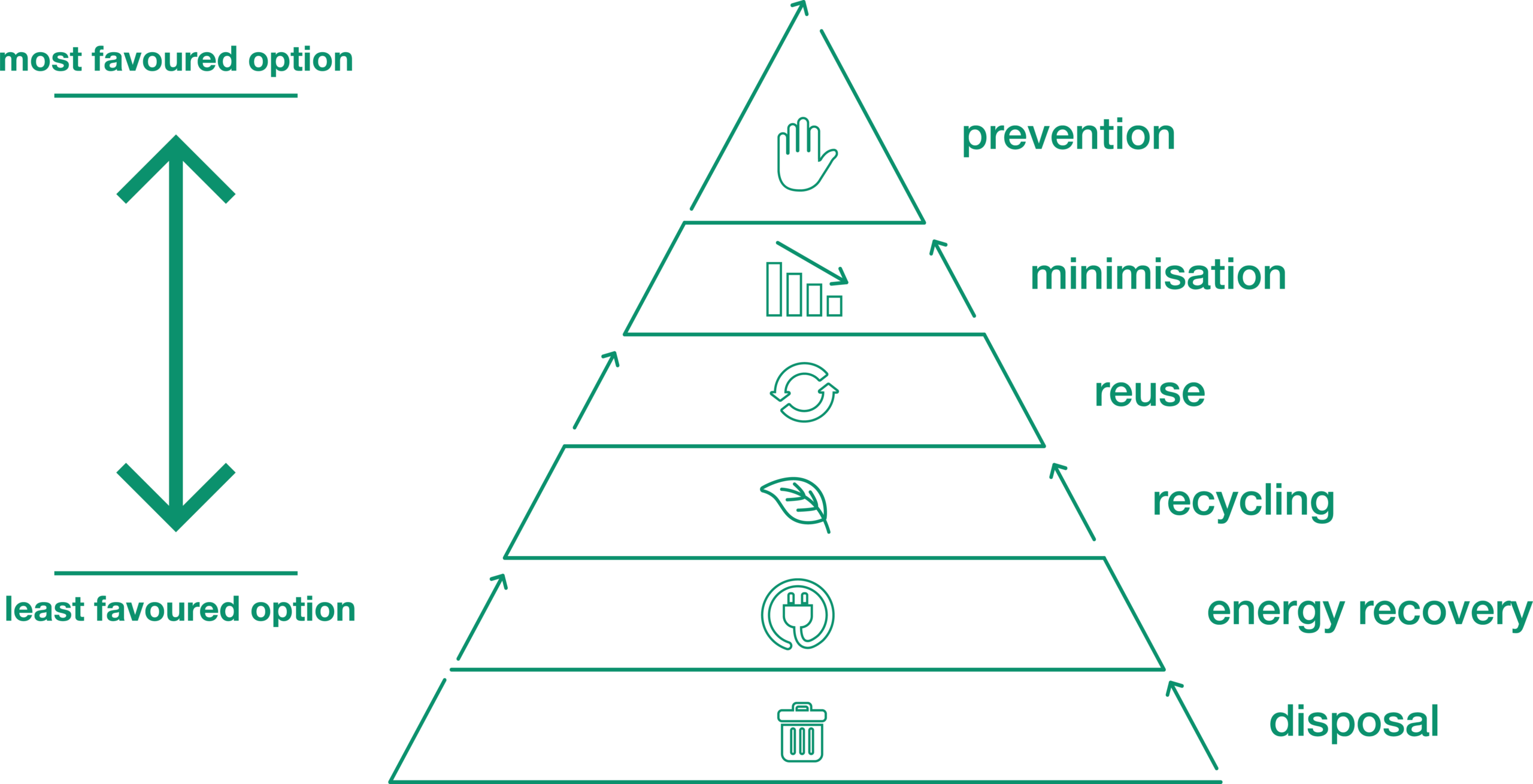
L'industrie du recyclage connaît une croissance rapide, et pour les produits et matériaux qui auraient été auparavant mis en décharge, une alternative plus respectueuse de l'environnement est désormais sur la table. Dans ce domaine, le concept "du berceau au berceau" - par opposition au "berceau à la tombe" - est de plus en plus appliqué aux produits afin de s'assurer qu'ils peuvent être plus facilement recyclés après leur utilisation. Le concept "du berceau au berceau" englobe l'ensemble du cycle de vie d'un produit, de la conception à l'utilisation, en passant par la fabrication et la distribution, jusqu'à son retour éventuel dans l'installation de recyclage appropriée.
De plus, le recyclage, en tant que méthode de gestion des déchets, s'inscrit dans des concepts tels quel'économie circulaire.L'économie circulairevise à s'éloigner des modèles linéaires, où l'on fabrique, utilise puis jette les objets, pour privilégier un système qui permet de maintenir les ressources en circulation aussi longtemps que possible. LaFondation Ellen MacArthurfait partie des organisations qui promeuvent actuellement les concepts de l'économie circulaire, et plusieurs études de cas illustrent concrètement le fonctionnement de ce système.
Cependant, il est triste de constater que de nombreux articles qui peuvent être recyclés finissent toujours dans les décharges, et parmi les nombreux défis auxquels est confronté ce type de pratique de gestion des déchets, la collecte, le tri et le détournement corrects des produits recyclables sont peut-être les plus urgents. En outre, l'augmentation des pratiques de recyclage peu recommandables, telles que l'expédition de déchets à travers les océans pour traitement, a conduit de nombreuses personnes à réclamer de meilleures mesures de détournement et de suivi des matériaux pour s'assurer que les produits envoyés au recyclage sont effectivement recyclés.