

Javits Center and RTS Redefine Sustainability at Scale
With over 3.3 million square feet of space—about the size of 60 football fields—the Javits Center in New York City hosts more than 120 events a year, welcoming millions of visitors. That means thousands of tons of waste, from cardboard and electronics to food scraps and plastics, moving through its doors annually. Managing that scale without sacrificing safety, efficiency, or sustainability is no small feat.
Problem
The Javits Center faced a massive challenge: thousands of tons of waste from hundreds of events, often moving through the building in a single day. Each event brings unique waste streams—electronics, hazardous packaging, organic waste, and more—that require specialized handling.
Working with RTS, Javits shifted from reactive cleanup to predictive, data-driven waste management.
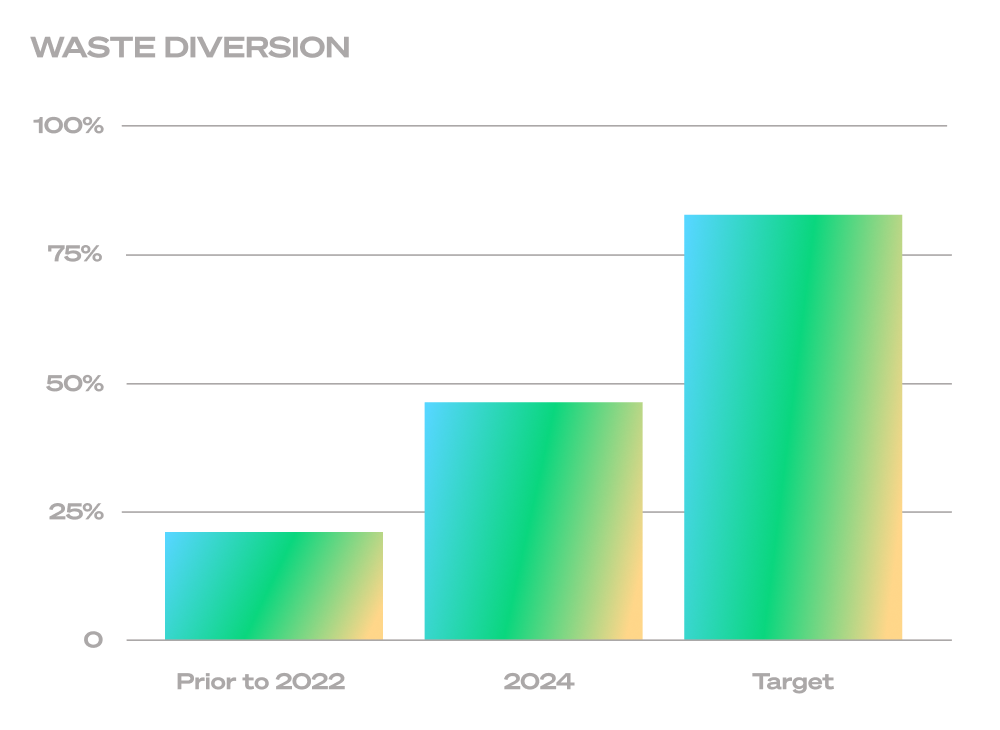
On Track to Reach 80% Diversion
As a result of our ongoing partnership with Javits, the diversion rate of waste has increased by 40%, all cardboard and non rigid plastic is baled and diverted, all collected organic waste is diverted and used to generate clean energy for homes in Brooklyn, and single stream recycling, which was previously heavily contaminated, is now clean and consistently diverted for recycling.
Scaling Success Together
Javits and RTS have built a powerful model for sustainable event management, and the journey is far from over.

Transforming Waste into a Model for Sustainability

When one of the busiest convention centers in North America reimagines waste, the results set a new industry standard.
Together with RTS, the Javits Center turned complex waste streams into measurable wins for people, planet, and business.
15% reduction
8+ tons diverted
127% increase
12% increase
Javits Center and RTS Redefine Sustainability at Scale
In the full case study, you’ll see how Javits and RTS are:
- Staying ahead of challenges with predictive waste strategies that keep events running smoothly.
- Scaling impact through data, training, and vendor partnerships that make sustainability part of daily operations.
- Proving ROI by showing how smarter systems cut costs and set new industry benchmarks.
"*" indicates required fields