
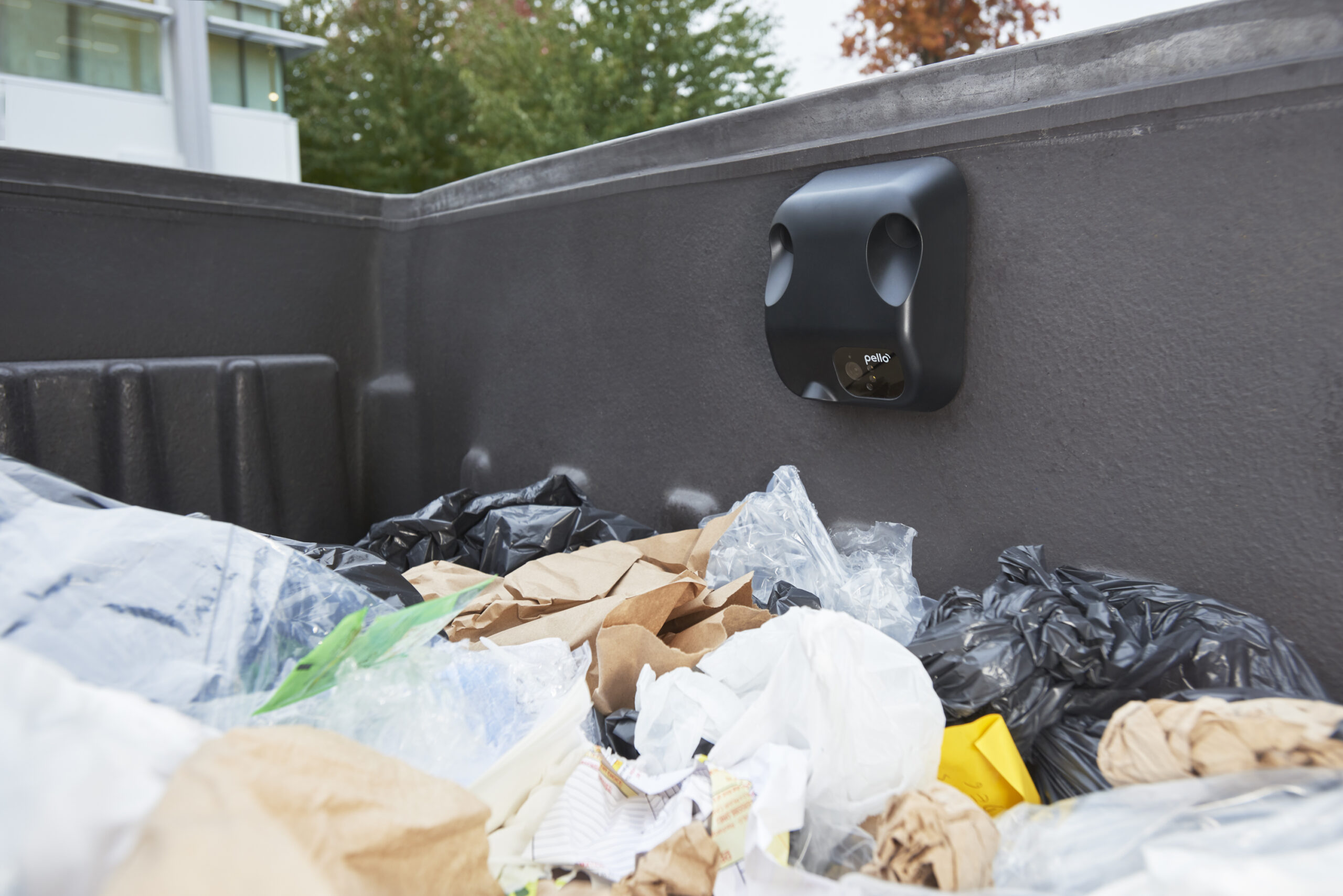
Our Pello sensors live in the real world.
That sounds obvious, but it creates a very different technology challenge than building software that lives entirely in the cloud. Pello devices operate on waste and recycling containers across North America. They encounter weather, movement and the everyday realities of waste infrastructure. As our Pello network has grown, our technology team at RTS has had to think differently about a problem customers rarely see:
How do you maintain the health of a large connected-device network without simply adding more and more manual monitoring? That question led our team to begin applying AI to the infrastructure behind Pello itself.
From Manual Monitoring to Intelligent Triage
Connected devices generate signals about their health and performance. Looking at one device is manageable. Looking for subtle patterns across a large fleet is a very different challenge. That’s exactly the kind of problem where AI can become useful.
Our team has been developing smarter ways to continuously evaluate device information, identify unusual conditions and provide our technical teams with better context about what may require attention. The goal is not to remove people from the process and to make sure our experts spend their time on the situations that actually require expertise. Instead of manually searching for potential issues, our teams can increasingly focus on diagnosing, prioritizing and resolving what the technology surfaces.
AI Behind the AI
I find this particularly interesting because it is an example of AI most customers will never directly interact with. Customers see the intelligence Pello provides about their waste operations. Behind that experience, our RTS team is also exploring how intelligence can make the infrastructure itself more reliable. That’s an important part of scaling physical technology.
A smart waste platform can only be as useful as the quality and consistency of the information behind it. So for our team, improving fleet health isn’t simply an engineering issue. It is part of the customer experience.
Giving Experts Better Tools
One of the biggest lessons from this work has been that good automation changes what the human does rather than simply eliminating the human. AI can evaluate large amounts of information continuously. An experienced technician understands the physical environment, recognizes exceptions and determines the appropriate response. Put those strengths together and the overall system becomes much more capable.
That is how our team at RTS thinks about AI more broadly. We are not interested in adding AI because it sounds innovative. We are interested in finding operational problems where AI gives talented people a new capability they did not have before.
Building for Scale
As more of the physical world becomes connected to software, this challenge will become increasingly common. Organizations will need intelligent ways to manage connected infrastructure without allowing complexity to grow at the same rate as the network itself.
At RTS, Pello is giving us the opportunity to solve those problems in one of the most demanding physical environments imaginable. And that’s part of what makes the work exciting.
We’re not only building smarter technology for waste containers. We’re learning how to build the intelligent systems required to operate that technology at scale.